
Nurse's Drug Handbook
AtmosphereAppsMedical
4.0281.00 Reviews
- Version
- 3.6.1.776
- Installs
- 100.00K
- Age Rating
- Everyone
Screenshots
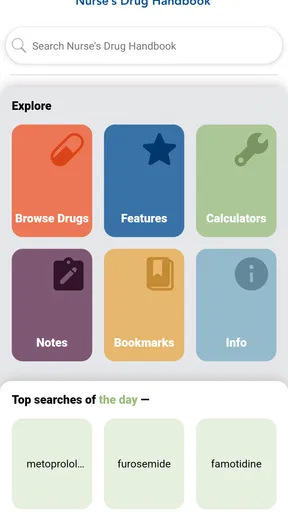
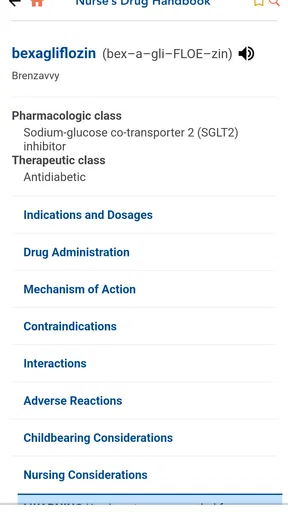
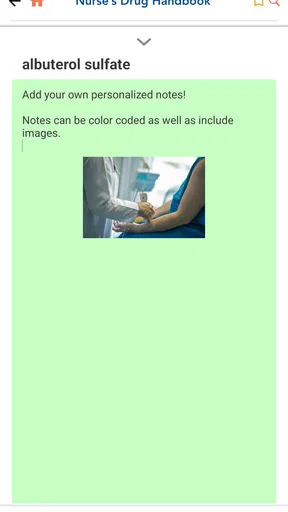
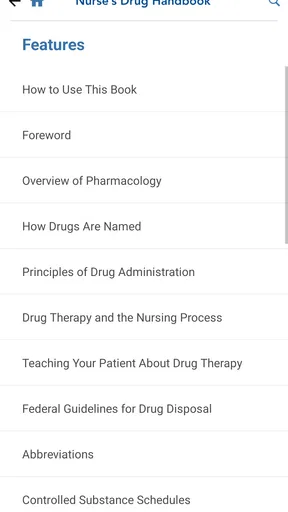
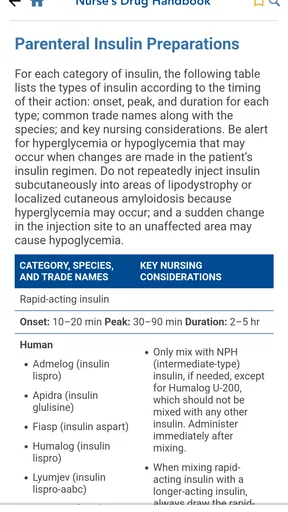
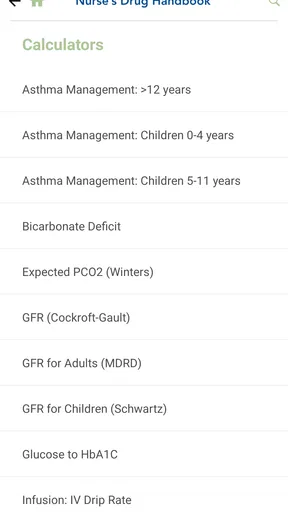
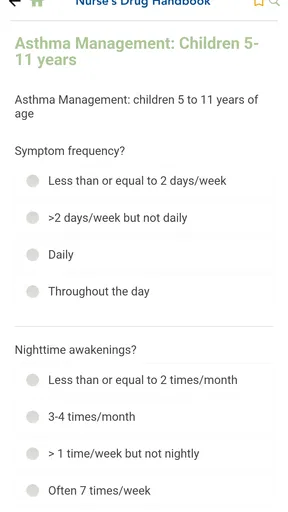
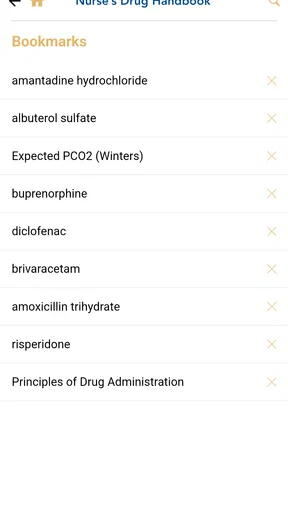
Our Review of Nurse's Drug Handbook
 Analysis by Appyee
If you are a nursing student, trainee, or practicing nurse who wants a drug reference close at hand, Nurse's Drug Handbook is the kind of medical app I would consider for quick study and routine checking. It is free to install, aimed at everyone from an age-rating perspective, and developed by AtmosphereApps. My first impression is that it is more useful as a focused reference companion than as a complete replacement for professional clinical resources.
The app has been available since February 20, 2015, and its current version is 3.6.1.776. That long presence gives it a familiar, established feel, while the store audience is also substantial: it has passed 100 thousand installs, with an average rating of 4.0 from around 2.4 thousand ratings and 281 written reviews. I would read those figures as a sign of steady usefulness rather than proof that it suits every nursing workflow.
Getting started with a practical drug reference
When I approach a reference app for the first time, I want to know whether it can help me reach a useful answer without making me learn an elaborate system. This handbook is best understood as a searchable pocket reference for medication-related learning and review. Its store summary presents it as an up-to-date, practical nursing drug reference, and that purpose shapes how I would use it: look up a medicine, read the relevant information, and then return to the wider clinical context before making any decision.
That distinction matters. A drug handbook can help me recall what a medication is used for or organize my study before a placement, but it should not become the only source behind a dose, administration choice, or urgent response. Medication practice depends on the patient, prescription, local protocol, formulation, timing, allergies, kidney and liver function, and many other details. I would use this app to support those checks, not to replace them.
The free entry point is helpful for a student who wants to test the experience before spending money. At the same time, in-app purchases range from $9.99 to $24.99 per item, so I would pay attention to what is available without purchasing and decide whether the additional material is genuinely useful for my work. The app is more attractive when I treat the free installation as a chance to evaluate its navigation and reference depth rather than assuming every part of the handbook is included at no cost.
What the first launch should feel like
My advice to a first-time user is to begin with a familiar medication instead of an obscure one. Searching for a drug I already recognize gives me a quick way to judge how clearly the app presents information and how easily I can move from the result to the detail I actually need. It also prevents a common mistake: confusing difficulty finding an unfamiliar term with a problem in the app itself.
Try both the brand name and the generic name when you are checking how the reference behaves. In everyday nursing work, a prescription, medication cart, textbook, and patient conversation may use different naming conventions. Learning how the handbook responds to those variations is a small but valuable setup step. I would also make a habit of checking the spelling carefully, especially with medicines whose names differ by only a few letters.
A good first session does not need to be long. I would choose one medicine from a current class, find its entry, read the main information slowly, and then compare that information with the order or study material in front of me. The meaningful success is not merely opening an entry; it is learning whether the app helps me answer a specific question without encouraging rushed conclusions.
A realistic first use during study or placement
Imagine preparing for a clinical shift and seeing several medicines listed in your notes. Instead of trying to memorize every detail at once, I would use the handbook as a structured review tool. I might look up one unfamiliar medication, identify the points I need to remember, and write a short note in my own words. Then I would move to the next drug and repeat the process, keeping the app open as a reference rather than treating it like a quiz.
This workflow is especially useful when the goal is preparation rather than immediate administration. It lets me turn a broad list of medicines into smaller questions: What is this drug generally for? What should I pay attention to when reviewing it? Which parts need confirmation from a local policy or supervising clinician? The app can make that preparation less intimidating because I have one consistent place to begin.
There is also a useful trade-off here. A compact handbook is faster than opening a large textbook for every basic lookup, but the speed can tempt me to stop reading too soon. I would use the quick search to locate the relevant entry, then slow down for the details that affect the actual patient in front of me. Fast access is valuable only when it leads to careful checking.
Where it fits beside other nursing resources
Compared with a printed drug handbook, this app is easier to carry and more convenient when I need to search rather than browse alphabetically. A paper reference can still be preferable for uninterrupted reading, classroom annotation, or situations where I want to compare several nearby entries without switching screens. I see the app and the book as alternatives for different moments, not as direct competitors in every situation.
Compared with a general web search, a dedicated nursing reference is less distracting. Search engines often return a mixture of advertisements, patient-facing explanations, outdated pages, and sources written for different audiences. A focused handbook gives me a more relevant starting point. However, a web search or an institutional database may be better when I need an official local protocol, a current safety notice, or information tied to a particular healthcare system.
Compared with a full clinical decision-support platform, this handbook is likely to feel simpler and narrower. That can be a strength for revision and quick orientation, but it is also the reason I would not rely on it alone for complex cases. If my work requires integrated patient records, interaction checking, dosing tools, or institution-specific guidance, I would choose the approved professional system first and use this app only as a supplementary reference.
Small habits that make the reference more useful
One of the most useful habits is to search before the situation becomes urgent. During a calm study session, I can learn how the app organizes its entries and identify the information that is easiest for me to miss. Under pressure, I then spend less time figuring out the interface and more time verifying the relevant point. This is a practical advantage that does not appear in a short store description, but it can make a reference app feel far more dependable.
I also recommend separating three kinds of use: learning, preparation, and real-time checking. For learning, I read broadly and make notes. For preparation, I focus on the medicines connected to the next shift or assignment. For real-time checking, I use the app only as one part of a deliberate verification process. Mixing these purposes can lead to overconfidence, particularly if I remember a general description but forget that the patient’s situation changes the decision.
Another useful approach is to keep the medication name and formulation in view while reading. Similar names can refer to different products, and a handbook entry may be informative without answering every formulation-specific question. I would confirm that the entry matches what I am actually reviewing before carrying any information forward. This is a simple safeguard, but it is more valuable than trying to memorize the entire reference.
Points that may confuse a new user
The word “handbook” can create unrealistic expectations. I would not assume that installing the app automatically gives me a complete clinical answer for every drug-related problem. A reference entry is not the same as a patient-specific recommendation, and a general explanation is not the same as a verified medication order. New users should keep that boundary clear from the first day.
The purchase structure may also cause hesitation. Because the app is free to install but offers individual in-app purchases between $9.99 and $24.99, I would explore the basic experience first and only consider paying after deciding that the added content fits my needs. A student with occasional study questions may be satisfied without spending more, while someone who uses a drug reference regularly may find an expanded option easier to justify.
Another point of confusion is the age rating. “Everyone” describes the store’s content classification, not the professional level required to interpret medication information safely. A general audience can open the app, but safe clinical use still requires nursing education, supervision where appropriate, and attention to local practice standards. I would never treat the age label as evidence that the material is suitable for unsupervised medication decisions.
Finally, an average rating of 4.0 suggests a generally positive but not flawless experience. I would expect the app to help many users while still having areas that feel less convenient or less complete than they would like. That is a fair expectation for a long-running reference tool, and it is another reason to test it against my actual study routine before making it central to my workflow.
Who will benefit most from it
I think Nurse's Drug Handbook is most suitable for nursing students building familiarity with medication names and uses, newly qualified nurses who want a portable revision aid, and experienced staff who occasionally need a straightforward reminder. It can also suit someone who prefers a focused reference over a broad medical app filled with unrelated tools.
The app is less suitable for a person looking for diagnosis, emergency triage, or individualized treatment advice. It is also not my first choice for a hospital that already requires a specific institutional database or integrated medication system. In those settings, compliance and local accuracy matter more than convenience, and the approved resource should take priority.
Patients and family members should be cautious as well. A nursing drug handbook may help explain why a medication is being discussed, but it is not a substitute for asking a pharmacist, nurse, or doctor about a personal prescription. I would particularly avoid using any reference app to change a dose, stop a medicine, combine products, or interpret a serious reaction without professional guidance.
My practical verdict after using the app
What I like most is the clear purpose. This is not trying to be an all-purpose wellness platform; it is built around the idea of keeping a nursing drug reference available when I need to study or orient myself. The free installation lowers the barrier to trying it, and the established Android release, with support for Android 8.0 and later, makes it accessible to many users with older devices as well as newer ones.
What holds it back is the gap between quick reference and complete clinical support. I would still need authoritative local guidance for decisions that depend on policy, patient history, formulation, or urgent risk. The optional purchases also mean that the most useful version for one nurse may not be the same value for another. I would not pay automatically; I would first identify the questions I regularly ask and see whether the app answers them efficiently.
My recommended path is simple: install it, search for a medicine you already know, read the entry carefully, and then test the same process with a drug from your next study topic or shift. If the navigation feels natural and the information supports your learning, keep it as a secondary reference. If you need integrated clinical checks or institution-specific instructions, choose the approved alternative instead.
Overall, I see Nurse's Drug Handbook as a useful starting point for medication study and everyday orientation, especially for someone who wants a dedicated nursing reference without immediately committing to a paid resource. Its strongest role is helping me prepare, recall, and organize questions. Its safest role is supporting—not replacing—professional judgment and verified clinical guidance.
Verdict
Strengths of Nurse's Drug Handbook
- Comprehensive drug coverage supports quick reference during clinical work.
- Includes generic and brand names for easier medication identification.
- Clear monographs help check indications, dosing, and precautions.
- Useful nursing-focused details support safer medication administration.
- Portable format provides access without carrying a large printed handbook.
Limitations of Nurse's Drug Handbook
- The extensive content can feel overwhelming for first-time users.
- Some features may require in-app purchases or a subscription.
- Drug information should still be checked against current local guidelines.
- Search results may depend on using precise medication names.
- The interface may feel less modern than newer clinical reference apps.
Other Releases by AtmosphereApps
View All
FP Notebook
Medical4.9

Davis's Drug Guide for Nurses
Medical4.8

Physicians Cancer Chemotherapy
Medical4.7
Similar Picks in This Category
View All
WebMD: Symptom Checker
WebMD, LLC4.1

Microphone Amplifier
DOSA Apps4.2

Anatomy Learning - 3D Anatomy
3D Medical OU4.5

Period Tracker and Calendar
SimpleInnovation4.9

GoodRx: Prescription Coupons
GoodRx4.8

CVS Health
CVS Pharmacy4.5
Frequently Asked Questions
What is Nurse’s Drug Handbook, and who is it designed for?
Nurse’s Drug Handbook is a medication reference resource created primarily for nurses, nursing students, healthcare professionals, and other users who need quick access to drug information. It typically includes details such as uses, dosages, precautions, adverse reactions, interactions, and administration guidance. It should be used as a reference alongside professional training and current clinical protocols.
Does Nurse’s Drug Handbook provide complete and reliable medication information?
The handbook is intended to offer practical, organized medication information in a convenient format, but no reference app should be treated as the only source for clinical decisions. Drug recommendations, warnings, and approved uses can change over time. Before administering medication, users should verify information with the latest official labeling, institutional policies, a pharmacist, or another qualified healthcare professional.
Can I use the app without an internet connection?
Offline availability depends on the specific version of Nurse’s Drug Handbook and how its publisher has implemented the app. Some editions may store the main drug database on the device after installation, while others may require an internet connection for access, updates, or certain features. Check the app listing and test the reference before relying on it in areas with limited connectivity.
What information can I expect to find for each medication?
Medication entries may include generic and brand names, therapeutic classifications, indications, contraindications, precautions, common and serious adverse effects, interactions, dosage guidance, administration instructions, and monitoring considerations. The exact content can vary by edition, platform, region, and subscription status. Always read the complete entry and consider patient-specific factors before using any information clinically.
Is Nurse’s Drug Handbook suitable for diagnosing or treating patients?
No. Nurse’s Drug Handbook is an educational and clinical reference tool, not a replacement for diagnosis, prescribing authority, nursing judgment, or direct medical advice. It cannot evaluate a patient’s complete history, allergies, laboratory results, or current condition. Users should consult a licensed healthcare professional for individualized guidance and seek urgent medical assistance when a serious reaction or emergency is suspected.
